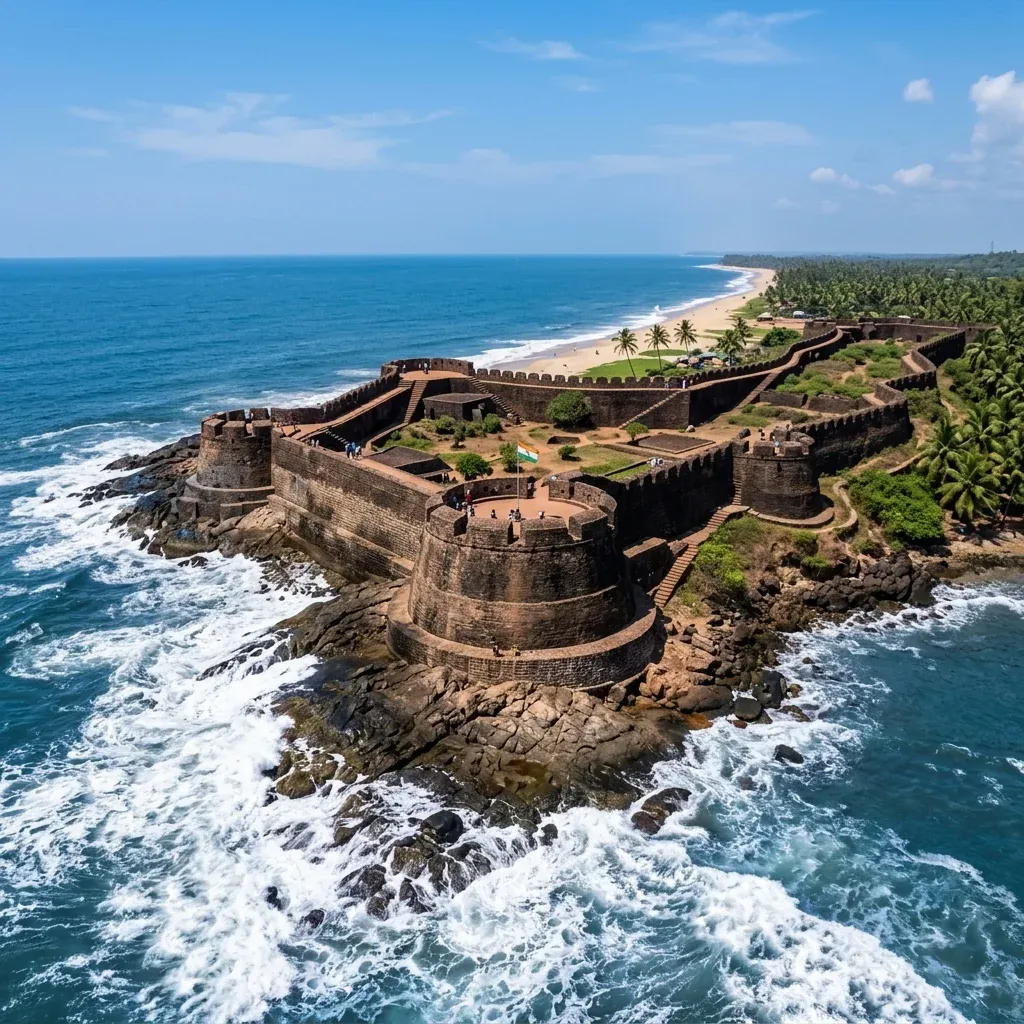
Spanning 40 acres across a massive rocky headland, Bekal Fort is the largest and arguably most perfectly preserved fortress in Kerala. Built solely for defensive combat, its imposing laterite walls dramatically rise straight out of the crashing Arabian Sea.
Bekal Fort
The Grand Keyhole Citadel of the Arabian Sea
A Glimpse into History
Origins – Shivappa Nayaka
Constructed in 1650 AD by Shivappa Nayaka of the Keladi Nayaka kingdom, the fortress was explicitly designed to defend crucial coastal spice routes. Unlike most Indian forts, it contains absolutely no palaces or mansions inside.
Evolution – Changing Flags
Following the fall of the Nayakas, the mighty fort was captured heavily by Hyder Ali and subsequently expanded by Tipu Sultan. It operated as a major military garrison protecting their Malabar conquests.
Modern Era – Heritage Site
The British East India Company decisively conquered the fort in 1799, transforming it strictly into an administrative outpost. Today, the Archaeological Survey of India meticulously protects the massive bastions.
Significance
The fort incredibly features ingeniously designed water-facing observation towers with zigzagging defensive sightlines. These unique holes allowed defenders to fire cannons far out to sea while remaining completely hidden from retaliation.
Festivals & Events
Theyyam Performances (Winter)
Nearby rural village shrines surrounding Kasaragod host spectacular intensely dramatic Theyyam rituals. Dancers wearing massive red headgears enter deep trances directly portraying local warrior deities.
Bekal Beach Festival (December)
A massive vibrant coastal carnival successfully held on the adjacent glowing sands. It prominently features epic sand sculpture competitions, live cultural melodies, and delicious coastal food stalls.
Did You Know?
The central soaring observation tower, ascending nearly 80 feet high, was explicitly added by Tipu Sultan specifically to track distant incoming naval armadas across the vast horizon.
Travel Guide
How to Reach
By Air: Mangaluru International Airport (IXE) in Karnataka serves as the closest hub roughly 70 km north.
By Train: Kanhangad Railway Station (KZE) operates efficiently only 12 km down the direct highway.
By Road: Auto-rickshaws and coastal taxis seamlessly cruise directly off NH 66 straight into the fort parking lot.
Best Time to Visit
September to March provides beautifully clear skies enhancing the ocean panoramas perfectly. Massive monsoon waves (July) offer intensely dramatic photography but eliminate safe beach access below the fort walls.
Local Attractions
Bekal Beach (Adjacent): A superbly maintained adjoining beach providing beautifully illuminated sunset walkways natively curving under the fort.
Kappil Beach (~7 km): An incredibly secluded and deeply peaceful wide golden sand stretch located slightly north.
Chandragiri Fort (~15 km): A ruined elevated 17th-century fortress specifically offering massive sweeping views across the scenic Payaswini River.
Tips for Visitors
Explicitly prepare for extensive walking up massive steep stone ramps covering the entire 40-acre sprawling complex.
Carry heavy water supplies specifically because zero commercial kiosks are legally permitted inside the historic walls.
Visit perfectly early around 8:00 AM or squarely at 4:30 PM to successfully avoid the blistering exposed midday sun.
Securely capture photographs from the central towering bastion specifically matching famous scenes from Indian cinema blockbusters.
Location Map
Image Gallery